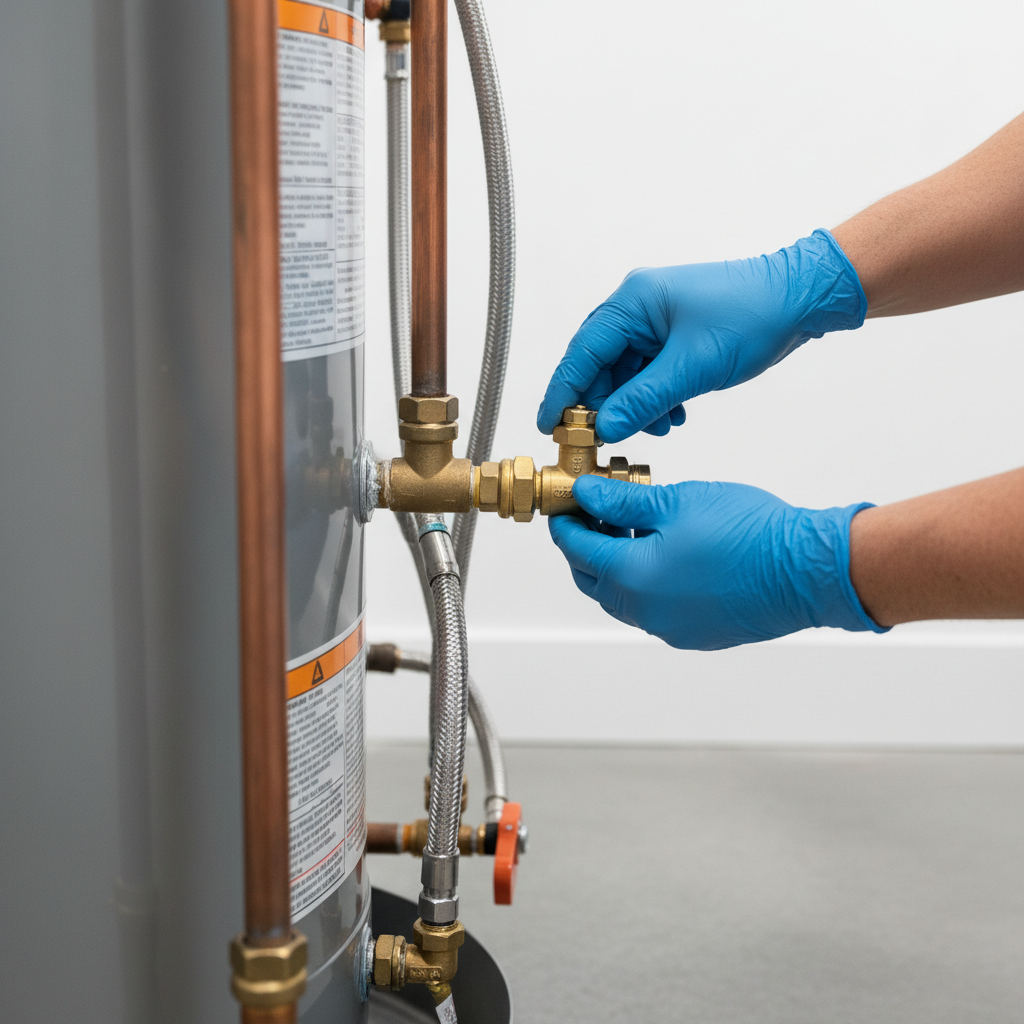
Routine water heater maintenance involves flushing the tank annually to remove sediment and testing the temperature and pressure relief valve for proper operation. Homeowners should also inspect the sacrificial anode rod every two to three years and replace it when necessary to prevent tank corrosion. Performing these simple tasks consistently will improve energy efficiency and extend the overall lifespan of the appliance.
Imagine waking up to an ice cold shower on a freezing Utah morning; it is a frustrating reality for many homeowners in Carbon County who neglect their water heaters. Local hard water is particularly aggressive, causing mineral sediment to settle at the bottom of your tank and force the unit to work twice as hard to produce heat. Over time, this buildup leads to higher utility bills, strange popping noises, and premature equipment failure. At Keiths Plumbing, we understand that a little proactive care goes a long way in protecting your home and your budget. In this guide, we will explore the unique challenges of maintaining a water heater in our region, provide a comprehensive maintenance checklist, and offer a step by step guide to flushing your system like a professional.
Why Water Heater Maintenance Matters in Carbon County
Residents in Carbon County face unique environmental factors that directly impact the longevity of their home appliances. While many national guides offer generalized advice, plumbing in Utah requires a localized approach due to the state’s extreme water hardness levels. In our region, water hardness frequently measures between 15 and over 30 grains per gallon (GPG), a figure that significantly exceeds the national average.
This high mineral concentration accelerates sediment buildup, which acts as a corrosive force inside your tank. Because of these conditions, proactive water heater maintenance is often the deciding factor in how long your equipment remains functional. A unit that receives routine care and regular flushing can easily reach a 12 year lifespan. Conversely, a neglected system in Carbon County may experience significant efficiency loss or tank failure in as little as 6 years.
At Keiths Plumbing, we specialize in residential and commercial plumbing services designed to handle these specific geological challenges. Our team understands local water chemistry and the specific wear patterns it creates on heating elements and tank linings. If you have questions about your system’s performance or current safety status, you can contact Keiths Plumbing for a professional assessment to ensure your system remains code compliant and efficient.
The Impact of Utah Hard Water and Sediment Buildup

The high grain-per-gallon measurements mentioned earlier are not just abstract figures; they represent a physical process occurring inside your tank every day. When water is heated, dissolved minerals like calcium and magnesium lose their solubility and solidify into crystals. This process, known as scaling, creates a heavy layer of particulate matter that settles at the bottom of the tank.
A common question from homeowners is, "Does hard water cause sediment in a water heater?" The answer is a definitive yes. In our region, hard water is the primary source of the "sand" or "mud" found during a flush. This accumulation creates a significant mechanical problem because the sediment acts as an insulator. In a gas water heater, the burner is located at the bottom of the unit, directly beneath the tank floor. When a thick layer of scale builds up, the burner must work significantly harder and run longer to heat the water through that insulating barrier. This inefficiency directly leads to higher energy bills and places unnecessary strain on the equipment.
There are specific audible signs that this process is reaching a critical stage. If you hear a popping, rumbling, or "kettling" sound coming from your utility closet, it is not a ghost in the pipes. These noises occur when water becomes trapped beneath the hardened sediment layer. As that trapped water boils, it turns into steam bubbles that violently burst through the mineral crust to reach the rest of the tank.
Beyond the noise, this localized overheating is dangerous for the tank itself. The constant thermal stress can cause the steel bottom to overheat, weakening the metal and eventually leading to a breach. Utilizing professional residential and commercial plumbing services to manage this buildup is the most effective way to protect your investment. If your heater is already making these noises, you should contact Keiths Plumbing to check if the tank's structural integrity has been compromised by the heat.
A Comprehensive Water Heater Maintenance Checklist
To combat the effects of mineral scaling and ensure safe operation, homeowners should follow a structured routine. These steps verify that the system is operating within manufacturer specifications and local safety codes. Consistent water heater maintenance involves more than just a quick glance at the tank; it requires a targeted inspection of the components most vulnerable to Utah's hard water.
Test the Temperature and Pressure (TPR) Relief Valve. Briefly lift the lever to ensure water discharges into the overflow pipe and stops once the lever is released. This valve is a critical safety device that prevents the tank from over-pressurizing and potentially exploding. A seized or leaking valve is a major code violation and a significant safety hazard.
Inspect the sacrificial anode rod. This rod attracts corrosive elements to itself to prevent the steel tank from rusting. Given Carbon County's water chemistry, these rods often deteriorate rapidly. If the rod is thin or the wire core is visible, it must be replaced to protect the tank's interior lining.
Check for visible leaks around fittings. Examine the top connections, the cold water shut-off valve, and the drain valve at the base. Small leaks often start at the pipe junctions due to constant thermal expansion or mineral corrosion at the threads.
Assess tank and pipe insulation. Check that the tank jacket and pipe sleeves are secure and undamaged. In our climate, insulation prevents heat from escaping into unconditioned spaces like garages or basements, which reduces the workload on your heating elements.
Verify the thermostat is set to 120 degrees Fahrenheit. This setting is the industry standard for preventing accidental scalding while also slowing the rate of mineral precipitation. Setting the temperature higher than necessary wastes energy and accelerates the sediment problems discussed previously.
Performing these checks allows you to catch minor issues before they necessitate full residential and commercial plumbing services. If you find a component that is stuck, heavily corroded, or if you are uncomfortable handling these pressurized parts, you can contact Keiths Plumbing to ensure the inspection is handled safely and according to local building codes.
How Often Should You Flush a Water Heater in Our Region?
While national manufacturers like Rheem and retailers like Home Depot generally recommend flushing a tank once every twelve months, Carbon County residents must adjust this schedule to account for local geological conditions. Given the extreme mineral concentrations found in our local water supply, we recommend performing this specific part of your water heater maintenance every six months. This increased frequency ensures that the heavy calcium and magnesium deposits do not have time to solidify into a thick, insulating crust that hampers efficiency and stresses the tank floor.
A common concern for property owners is, "Should I flush my water heater after 5 years?" If your unit has gone five years or more without any service, proceed with caution. In older, neglected tanks, heavy sediment can actually act as a temporary plug for small pinhole leaks or corroded spots. When you flush out that buildup, you may inadvertently reveal an existing leak that was previously held together by mineral scale. If your system has been neglected for several years, it is safer to contact Keiths Plumbing for a professional assessment first. We can determine if the tank is still structurally sound or if it requires specialized residential and commercial plumbing services to handle heavy descaling without causing a catastrophic failure.
Step by Step Guide to Flushing Your Water Heater
Carbon County homeowners often ask if they can perform water heater maintenance themselves. The answer is yes, provided you follow a precise sequence of steps to protect both the equipment and your safety. Given the heavy mineral accumulation in our local water, this process requires careful execution to ensure all sediment is effectively removed.
Disconnect the Energy Source. For electric heaters, turn off the dedicated circuit breaker. For gas heaters, turn the thermostat knob to the Pilot or Vacation setting. Never attempt to drain a powered unit, as the heating elements will burn out instantly once they are no longer submerged, a failure known as dry firing.
Shut Off the Water Supply. Locate the cold water inlet valve on top of the tank and turn it to the off position.
Connect a Drain Hose. Attach a heavy duty garden hose to the drain valve at the base of the tank. Direct the other end to a floor drain or a safe discharge area outside. Use caution, as the water exiting the tank will be near 120 degrees Fahrenheit and can cause immediate burns.
Prevent Vacuum Lock. Open a hot water faucet at a sink near the heater. This allows air to enter the system, breaking the vacuum and allowing the tank to drain efficiently through the bottom valve.
Drain and Flush. Open the drain valve. If the water flows slowly or stops, sediment may be clogging the valve port. You may need to briefly toggle the cold water intake to break up the blockage. Continue flushing until the water exiting the hose runs clear and free of mineral grit.
Refill the Tank. Close the drain valve and remove the hose. Open the cold water inlet valve. Keep the hot water faucet in the house open until water flows steadily without sputtering air.
Restore Power. Only after the tank is completely full should you restore gas or electricity.
If the drain valve is stuck or if you see large chunks of scale that refuse to exit the hose, specialized residential and commercial plumbing services may be required. In such cases, you can contact Keiths Plumbing to perform a professional deep flush and system inspection.
When to Call a Professional for Water Heater Service

Knowing the limit of a DIY project protects both your home and your equipment warranty. If you encounter a Temperature and Pressure (TPR) valve that is seized shut or continues to drip after testing, you should contact Keiths Plumbing immediately. A malfunctioning valve can lead to dangerous pressure levels that a homeowner cannot safely mitigate. Similarly, if an inspection reveals an anode rod that is fused to the tank or heavily corroded, professional extraction is necessary to avoid damaging the internal threads of the heater.
Persistent loud noises, such as popping or banging that continue even after a full flush, indicate that the sediment has hardened into a solid mass. In these cases, a simple hose drain is insufficient to restore efficiency. Our team provides professional descaling using specialized techniques to remove stubborn mineral shelves that impede heat transfer. Opting for professional residential and commercial plumbing services ensures that all repairs and upgrades are code compliant. This documentation is often vital for insurance claims and maintaining property value during home inspections. Professional intervention ensures your water heater maintenance is performed to the highest technical standards, protecting your investment from the harsh effects of local water conditions.