Low water pressure in house typically results from partially closed shutoff valves, failing pressure regulators, or mineral buildup within the plumbing system. Most issues can be fixed by fully opening valves and cleaning aerators; however, persistent problems may require professional repair for hidden leaks or significant pipe corrosion.
Imagine jumping into the shower after a long day in Carbon County only to be met with a weak, frustrating trickle instead of a steady stream. Low water pressure turns simple daily tasks like washing dishes or running the laundry into time consuming chores, yet the problem usually runs deeper than a simple annoyance. It often serves as an early warning sign for mineral scaling, hidden leaks, or failing mechanical components within your well system. In this guide, we will analyze the specific challenges facing homeowners in our region, including the impact of hard water and aging infrastructure. We will cover how to distinguish between sudden and gradual pressure drops, provide actionable troubleshooting steps for well systems, and explain the professional solutions required to restore your home to peak performance. Understanding these causes is the first step toward reclaiming the reliable water flow your household deserves.
Understanding Low Water Pressure in Carbon County Homes
Standard residential water pressure typically ranges between 45 and 80 pounds per square inch (PSI). When homeowners experience low water pressure in house fixtures, the reading has often dropped below the 40 PSI threshold, making everyday tasks like showering or running the laundry significantly less efficient. In Carbon County, these issues are frequently linked to the region’s specific geography and the maturity of local infrastructure.
Homeowners in towns like Price and Helper often contend with aging municipal supply lines that may struggle to maintain consistent volume. Furthermore, the high mineral content characteristic of our local water supply introduces unique challenges. Over time, calcium and magnesium deposits accumulate within the plumbing, acting as a bottleneck for water flow. Regardless of your connection to a city main or a private well system, these environmental factors are often the underlying cause of reduced performance.
Identifying the source of the problem is essential for a long term fix. If the pressure drop is localized or affects the entire building, it could stem from mineral scaling, a mechanical failure, or a hidden breach in the line. In cases where the cause isn't immediately obvious, utilizing leak detection services can help rule out structural damage. Understanding these local variables allows for more targeted professional plumbing repairs that ensure your system meets modern standards and handles the demands of our high-desert environment.
The Impact of Hard Water and Mineral Buildup
Carbon County’s geography results in water that is naturally rich in dissolved minerals, primarily calcium and magnesium. This hard water is a leading contributor to low water pressure in house systems throughout the region. As water moves through your plumbing, these minerals gradually settle on the interior surfaces of your pipes. This buildup, often referred to as scale, functions much like plaque in human arteries. Over a period of years, the opening within the pipe narrows, forcing the water to travel through a smaller diameter and significantly restricting the volume available at the tap.
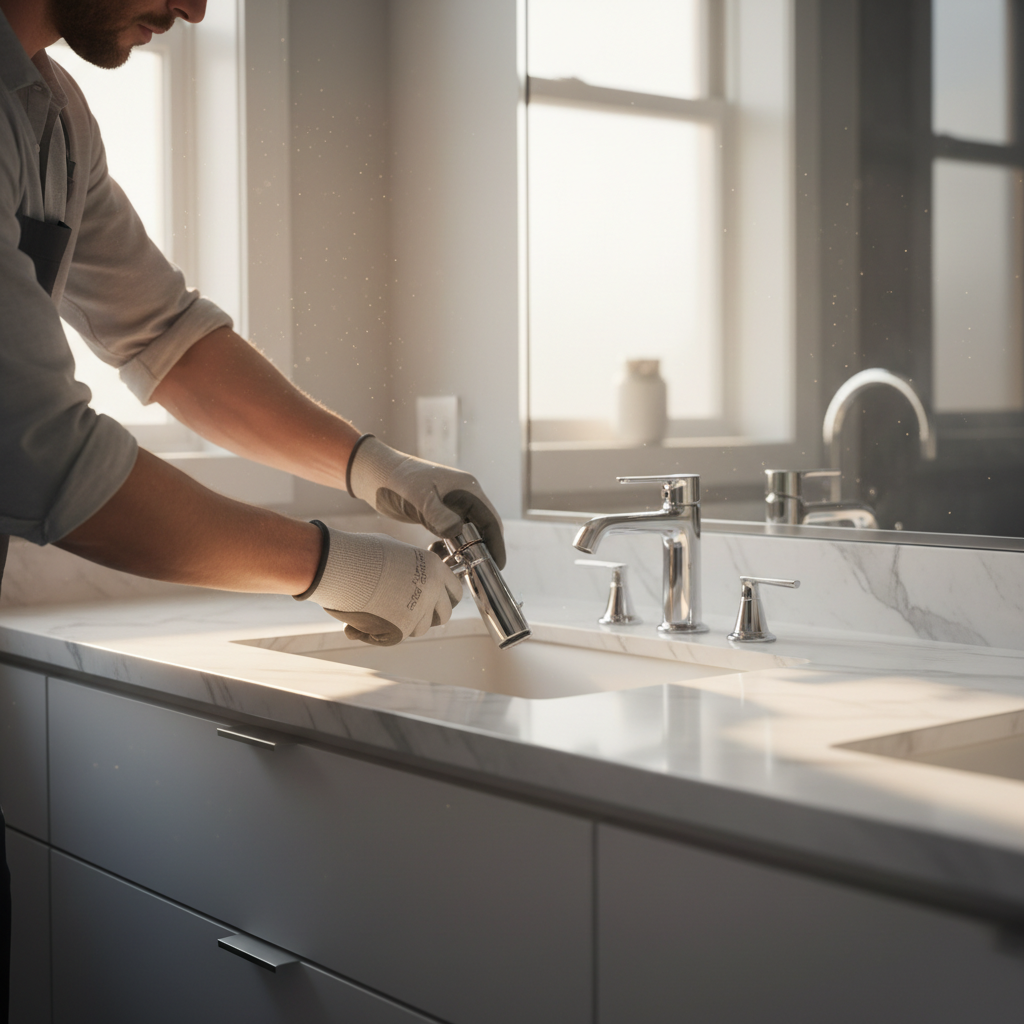
To determine if mineral buildup is the culprit, start by checking individual fixtures. If you notice a drop in pressure only at the kitchen sink or a specific shower, the issue is likely localized. Faucet aerators and showerheads are designed with fine mesh screens that easily trap sediment and mineral flakes. Removing these components and soaking them in a descaling solution or white vinegar often restores immediate flow. If cleaning the aerator provides no relief, the blockage might be further back in the supply lines or internal valve cartridges.
When the pressure loss is consistent across every room, the scale has likely reached a critical level in the main lines or within the water heater tank. While surface level cleaning helps individual fixtures, addressing systemic mineral restrictions often requires professional plumbing repairs to clear the lines or replace sections of pipe that have become too constricted to function. If you suspect your home’s plumbing is suffering from long term mineral accumulation, you can contact Keiths Plumbing for a detailed assessment of your system’s flow capacity.
Common Mechanical Causes of Low Water Pressure
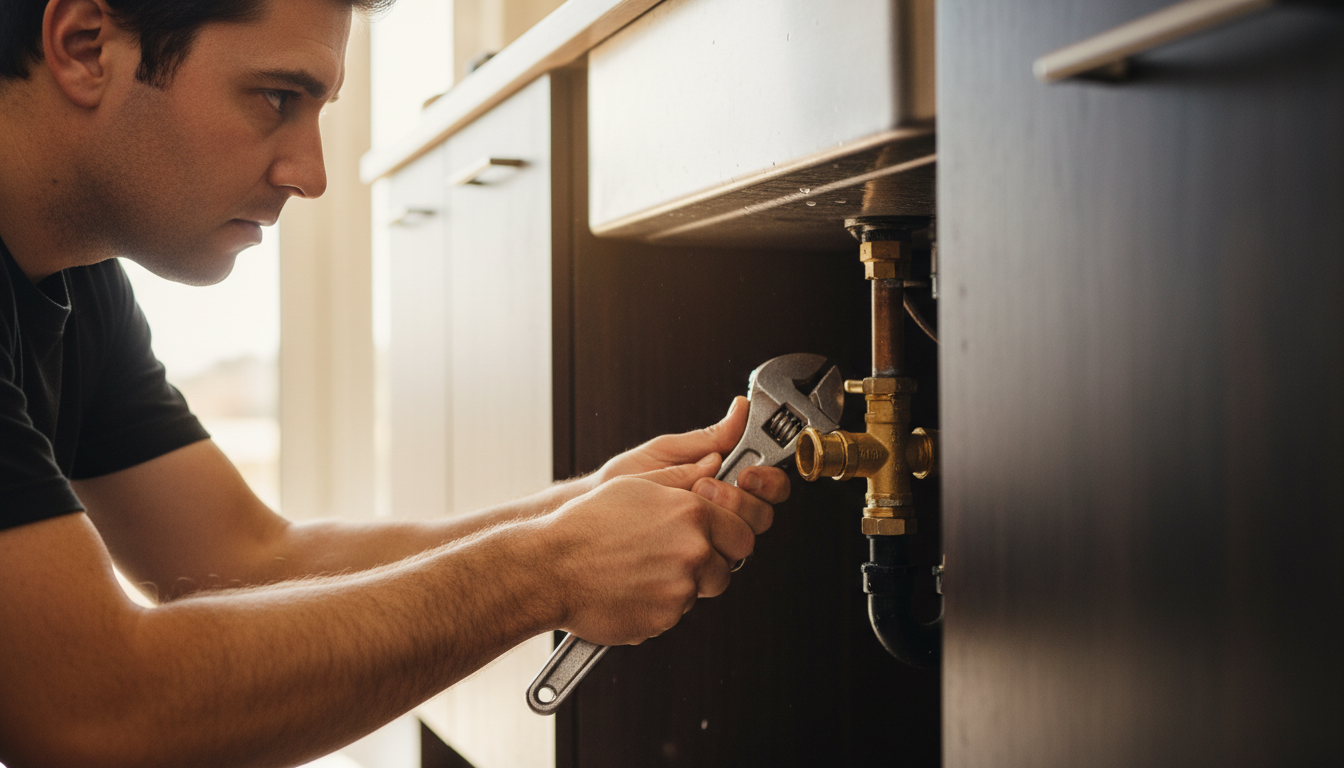
If cleaning your aerators does not restore flow, the issue may be a mechanical obstruction rather than a chemical buildup. Several specific valves control the flow of water into your home, and a single oversight during a recent repair or a component reaching the end of its service life can result in a sudden case of low water pressure in house systems.
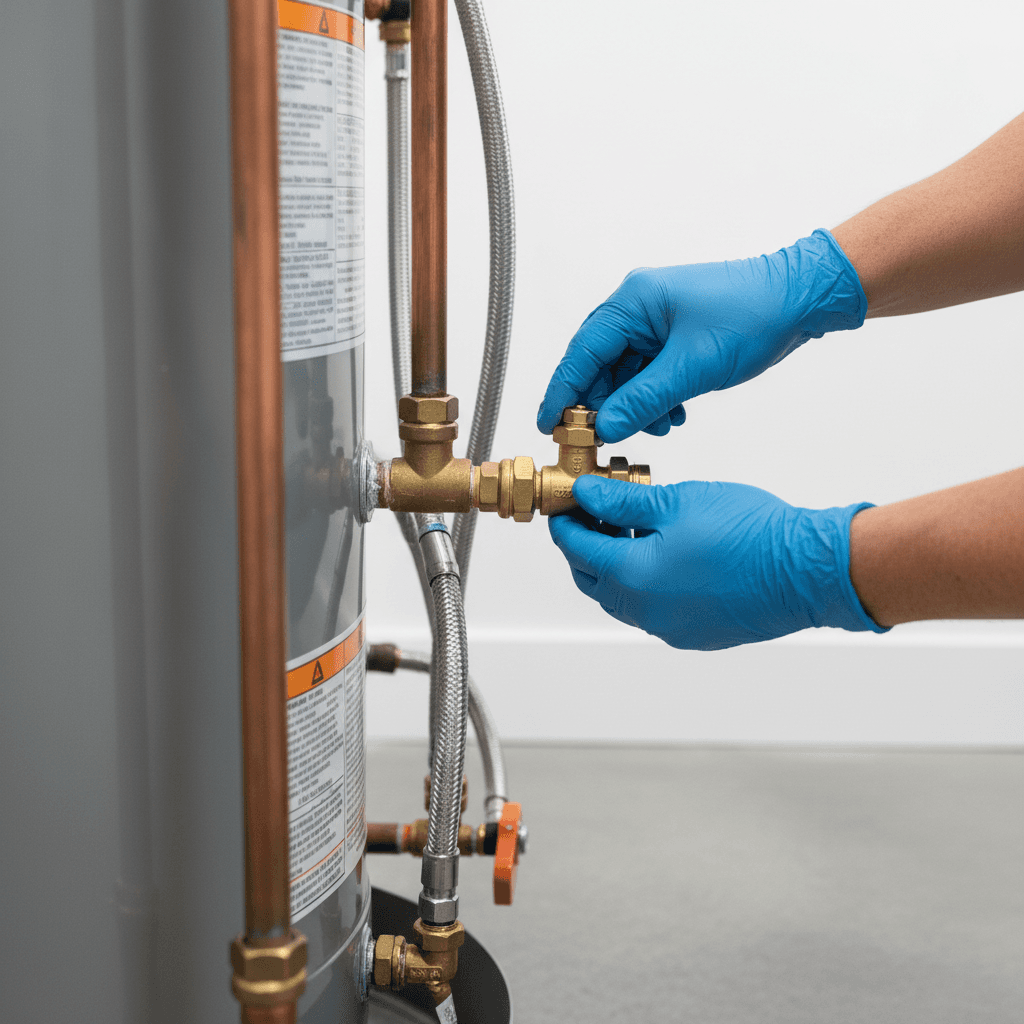
The first mechanical component to inspect is the main shutoff valve. This valve is typically located where the main line enters the foundation or near the water heater. In many Carbon County homes, these are either gate valves with a round handle or ball valves with a lever handle. If you have recently had professional plumbing repairs, ensure this valve is turned completely to the open position. A gate valve that is even slightly closed can create significant turbulence and restrict volume. If the handle spins without resistance, the internal gate may have detached, requiring a replacement.
Second, the water meter valve serves as the city’s shutoff point. While this valve is technically municipal property, it can sometimes be left partially closed after meter servicing or utility work in towns like Price. If your main shutoff is fully open but pressure remains low, the issue may lie with this secondary valve located at the meter box.
The most common mechanical failure we encounter is a faulty Pressure Reducing Valve (PRV). This bell shaped device is designed to step down high municipal pressure to a safe residential level.
Component | Expected Lifespan | Common Failure Symptom |
|---|---|---|
Pressure Regulator (PRV) | 10 to 15 Years | Sudden pressure drop or high-pressure spikes |
Main Shutoff (Gate Valve) | 20+ Years | Handle turns but internal gate remains stuck |
Main Shutoff (Ball Valve) | 30+ Years | Handle becomes difficult to turn or leaks at the stem |
A PRV generally lasts 10 to 15 years. When the internal spring or diaphragm fails, it can cause the water flow to slow to a trickle. Conversely, a failed PRV might allow full street pressure into your home, which risks blowing out seals. If you suspect a mechanical failure, you can contact Keiths Plumbing to perform a diagnostic pressure test and ensure your regulator is functioning within safe parameters.
Troubleshooting Low Water Pressure in House with Well Systems
For residents in rural parts of Carbon County who rely on private wells, diagnosing low water pressure in house systems requires looking beyond the municipal meter. The heart of a well system is the pressure tank and its accompanying switch. The tank maintains a specific air-to-water ratio to provide a steady flow of water without requiring the pump to run constantly. If the internal bladder fails or the tank becomes waterlogged, you may notice the pump turning on and off rapidly, a phenomenon known as short cycling. This creates fluctuating pressure at the tap and puts extreme stress on the pump motor, which can lead to an expensive premature failure.
The pressure switch acts as the communication hub, signaling the pump to activate when pressure drops below a set point, usually 30 or 40 PSI. Over time, the electrical contacts inside this switch can become pitted, burnt, or clogged with debris, preventing the pump from engaging at the correct time. If your pressure gauge shows a reading well below the cut-in threshold but the pump remains silent, the switch likely needs adjustment or replacement.
In our local high-desert environment, sediment and fine silt are frequently drawn into the system from the aquifer. Most rural setups include a whole-house sediment filter to protect indoor fixtures. A filter that has reached its capacity acts as a physical wall, choking off the flow to every tap. Replacing a saturated filter cartridge is often the simplest fix for restored volume. If maintenance of these components does not resolve the issue, you may require professional plumbing repairs to inspect the submersible pump or down-hole piping. For complex well diagnostics, you can contact Keiths Plumbing to ensure your private water system is operating within its designed parameters.
Hidden Leaks and Corroded Aging Pipes
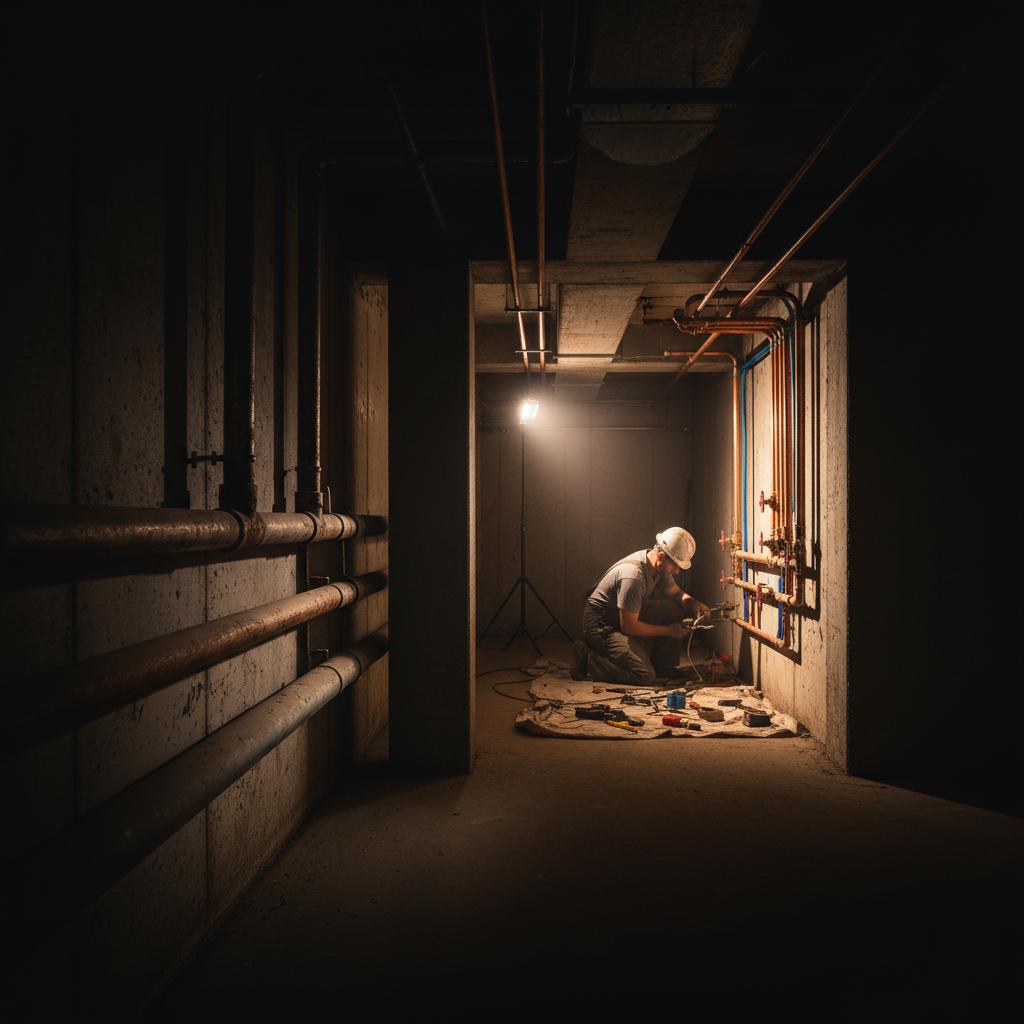
In older Carbon County neighborhoods, particularly those with homes built several decades ago, galvanized steel piping remains a common culprit for low water pressure in house systems. These pipes are notorious for corroding from the inside out. While the exterior might appear solid, the interior walls develop rust and mineral scale that significantly reduces the pipe’s diameter. Over time, this restricted passage limits the volume of water available to your fixtures, regardless of the municipal supply pressure. Because the corrosion occurs internally, the only definitive way to identify the extent of the damage is through a professional inspection of the pipe walls.
Beyond gradual corrosion, a sudden and significant loss of water pressure often signals a major hidden leak. If a pipe breaches behind a wall or beneath a concrete slab, the water follows the path of least resistance, diverting flow away from your faucets. Because many homes in the region are built on crawlspaces or slabs, these leaks can persist unnoticed for weeks; this leads to saturated soil and potential foundation damage. Utilizing professional leak detection services is critical in these scenarios. Identifying a breach early through professional plumbing repairs prevents the structural instability that often accompanies long term water intrusion. If you suspect an underground line has failed, you can contact Keiths Plumbing for a thorough site evaluation.
Sudden Low Water Pressure vs Gradual Decline
Identifying the speed at which your water volume changes is the most reliable way to prioritize your response. A sudden loss of water pressure in house fixtures typically points to an immediate mechanical or structural failure. If your water flow drops instantly, you should first check for a municipal main break in your Price or Helper neighborhood. If the city supply is stable, the culprit is likely a ruptured pipe or a total failure of the internal Pressure Reducing Valve diaphragm. These scenarios require urgent attention to prevent flooding and may necessitate leak detection services to find hidden breaks.
Conversely, a gradual decline indicates a long term issue. If you have noticed a slow decrease in pressure over several months or years, the cause is typically mineral accumulation within galvanized pipes or a well pump that is slowly losing its efficiency. While a gradual drop is less likely to result in immediate structural damage, it signals that your plumbing system is reaching the end of its functional lifespan. Addressing these steady declines with professional plumbing repairs before they lead to a complete system shutdown ensures your home remains functional. You can contact Keiths Plumbing to schedule a diagnostic flow test to determine the severity of your system’s decline.
Professional Solutions to Restore Your Water Flow

Restoring adequate flow requires more than just clearing an aerator; it involves a systematic diagnostic process to pinpoint the exact point of restriction. At Keiths Plumbing, we begin by conducting comprehensive pressure testing at multiple points in the system to differentiate between municipal supply issues and internal plumbing failures. For older homes in Carbon County with suspected internal corrosion, we use specialized inspection tools to visualize the state of galvanized lines without invasive demolition.
Diagnostic Tool | Purpose |
|---|---|
Static Pressure Gauge | Measures the maximum PSI when no water is running to test the PRV. |
Residual Pressure Test | Monitors PSI drop while fixtures are active to identify volume bottlenecks. |
Ultrasonic Detection | Pinpoints hidden breaks in main lines or under concrete slabs. |
Visual Pipe Inspection | Assesses the level of mineral scale or corrosion inside older iron lines. |
Once we identify the root cause, we prioritize professional plumbing repairs that adhere strictly to current Utah plumbing codes. This often includes installing high-grade, adjustable Pressure Reducing Valves (PRVs) or replacing segments of severely scaled piping with modern, corrosion-resistant materials. For residents dealing with low water pressure in house fixtures due to slab leaks, our leak detection services utilize acoustic technology to find the breach with minimal disruption. By focusing on meticulous installation and high-quality components, we ensure your water system provides reliable volume for years to come. You can contact Keiths Plumbing to schedule a professional flow restoration assessment today.